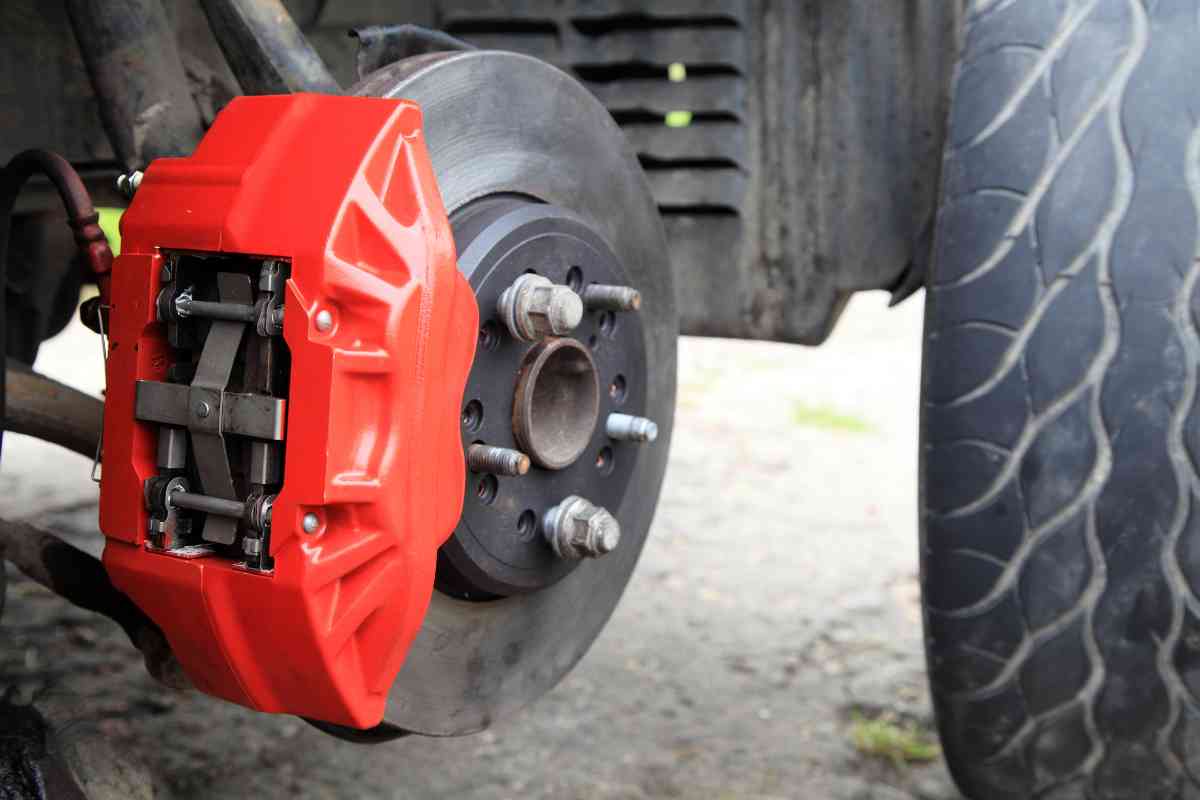
One of the essential components of your vehicle’s braking system is the brake caliper.
Responsible for applying pressure to the brake pads, the caliper plays a crucial role in bringing your vehicle to a stop.
But did you know that there are different types of brake calipers available? Each kind of caliper has unique features and advantages, from floating to fixed, sliding to the opposed piston.
And that’s precisely the aim of this post, to carefully go through the types of brake calipers and how they can help you stay safe on the road.
Types Of Brake Calipers
1. Floating Brake Calipers
Floating brake calipers are designed to move independently of the brake rotor and suspension components.
This movement allows the caliper to adjust to variations in the rotor surface, providing a more consistent grip and improving braking performance.
The design of floating brake calipers consists of a carrier that houses the caliper and brake pads, which float on guides attached to the suspension.
As the brake pedal is pressed, the hydraulic fluid pushes the caliper towards the rotor, causing the brake pads to grip the rotor and slow the vehicle.
Pros:
- Improved braking performance
- Better heat dissipation
- More consistent grip
Cons:
- Increased maintenance requirements
- A complex design can lead to increased wear and tear
Application:
- Floating brake calipers are commonly found in high-performance vehicles and racing applications, where their improved performance is valued.
2. Fixed Brake Calipers
Fixed brake calipers are brake calipers designed to be bolted directly to the suspension components and do not move concerning the rotor.
This design provides a simpler and more durable braking system but can also lead to inconsistent performance.
The brake pads are housed within the caliper and apply pressure directly to the rotor.
As the brake pedal is pressed, the hydraulic fluid pushes the caliper towards the rotor, causing the brake pads to grip the rotor and slow the vehicle.
Pros
- Simplicity and durability.
- They are also typically more cost-effective than other types of brake calipers.
Cons
- The fixed design can make it harder to adjust to variations in the rotor surface.
- This leads to decreased heat dissipation which can shorten the lifespan of the braking system.
Application
- Fixed brake calipers are commonly found on everyday vehicles, where their simplicity and cost-effectiveness are valued
3. Sliding Brake Calipers
Sliding brake calipers move along a track, allowing them to apply pressure to the brake pads and rotor.
Compared to fixed calipers, this movement enables the caliper to adapt to differences in the rotor surface and offers better braking performance.
Pros
- Improved braking performance
- Ability to adjust to variations in the rotor surface
Cons
- Higher maintenance standards
- More wear and tear from a more intricate design
- The cost of sliding brake calipers is often higher than fixed calipers
Application
- Sliding brake calipers are commonly found in high-performance vehicles and racing applications.
Related: Types Of Disc Rotors
Frequently Asked Questions
How Do I Know Which Type Of Brake Caliper Is Best For My Vehicle?
The best type of brake caliper for your vehicle depends on several factors, including your driving style, car use, and budget.
Here are a few things to consider when choosing a brake caliper:
Driving Style
Suppose you frequently drive at high speeds or engage in performance driving.
In that case, a floating or sliding brake caliper may be the best option, as they are designed to handle high temperatures and provide better braking performance.
Vehicle Use
A fixed brake caliper may be sufficient if you primarily use your vehicle for commuting or light driving.
Although, if you frequently tow heavy loads or drive in mountainous terrain, a floating or sliding brake caliper may be a better choice as it can provide better heat dissipation and braking performance.
Budget
Fixed brake calipers are generally the most cost-effective option, while floating and sliding brake calipers can be more expensive.
Can I Upgrade My Brake Calipers To A Different Type?
Well, the answer to this question is a Yes. You can upgrade your brake calipers to a different type.
However, upgrading your brake calipers can improve your vehicle’s braking performance and provide better heat dissipation, mainly if you frequently drive at high speeds or engage in performance driving.
However, upgrading your brake calipers is a complex process that requires the proper tools, experience, and expertise to ensure proper installation and performance.
Before upgrading your brake calipers, it’s essential to consider the following factors:
- Compatibility: Make sure that the new brake calipers are compatible with your vehicle’s braking system and will work with your current brake pads, rotors, and brake lines.
- Cost: Upgrading your brake calipers can be expensive, as it may require additional components, such as new brake lines, to ensure proper installation and performance.
How Often Do I Need To Maintain My Brake Calipers?
The frequency of maintenance for your brake calipers depends on various factors, including driving conditions, vehicle use, and brake caliper type.
Regular brake inspections, such as during a routine oil change or tire rotation, can help identify any potential issues with your brake calipers and ensure they are functioning correctly.
In addition, it’s essential to periodically clean and lubricate your brake calipers to reduce friction and wear.
So, if you notice any signs of wear or damage, such as leaks, worn brake pads, or uneven wear, you must call a qualified mechanic or brake specialist as soon as possible.
How To Tell If My Brake Caliper Is Bad?
Here’s how you can tell if your brake caliper is terrible.
Leaking Brake Fluid
If you notice a puddle of brake fluid under your vehicle, it may indicate a leaking brake caliper.
Uneven Or Excessive Brake Pad Wear
If your brake pads are wearing unevenly or if they are wearing faster than expected, it may be due to a problem with your brake calipers.
This can result in an increased risk of brake failure and should be inspected by a professional.
Brake Pulsation Or Vibration
If you feel a pulsation or vibration when you apply the brakes, it may indicate a problem with your brake calipers.
Sticking Or Dragging Brake Calipers
If your brake calipers are sticking or dragging, it can cause your vehicle to pull to one side when braking, resulting in increased brake wear and reduced braking performance.
Warning Lights Or Messages
If your vehicle is equipped with a warning light or message, it may indicate a problem with your brake calipers.
It’s essential to have your vehicle inspected by a professional.
Suppose you suspect a problem with your brake calipers.
In that case, you must have your vehicle inspected by a professional mechanic or brake specialist as soon as possible to ensure safe and effective braking performance.
Conclusion
Understanding the different types of brake calipers and their benefits is essential for maintaining the safety and performance of your vehicle.
Therefore, it’s essential to consider your driving style, vehicle use, and budget when choosing a brake caliper.
However, regular inspections and maintenance of your brake calipers are crucial for ensuring safe and effective braking performance.
So, whether you’re a performance driver or just someone who values their vehicle’s safety, investing in a high-quality brake caliper is essential.
Remember, your brakes are your vehicle’s most crucial safety feature, so don’t overlook their importance!
Related: