Like a good pair of shoes or sunglasses, the paint on your car is an important part of your identity.
You may not think about this when you buy a new car, but over the years and miles, the peeling, chipping, and wear-and-tear will take its toll on your pride and joy.
And the types of car paint protection you choose will determine how long your vehicle can put on with the cruel treatment of the external elements.
You can choose between Wax, Sealant, Ceramic Coatings, and Protection Film. And each of these paint protection varied in character and performance.
This makes it difficult for potential customers to know the best pick for their needs.
But this article will help you with that, as we will review each of the paint —what they are made of, how durable they are, and their disadvantages.
Types Of Car Paint Protection
1. Car Wax
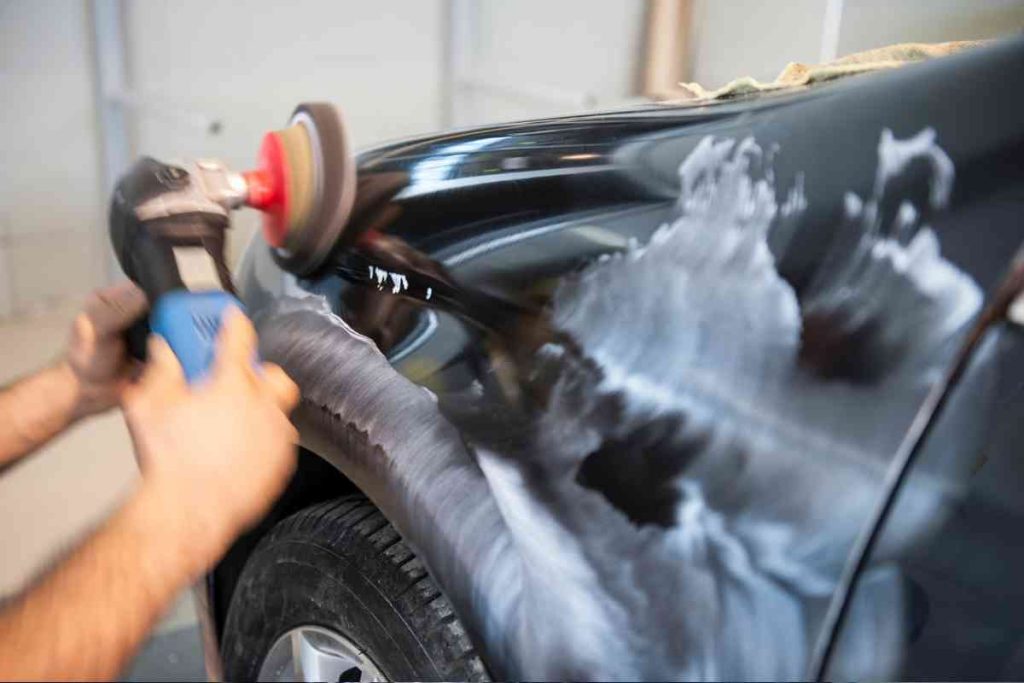
Car wax is a transparent coating applied to the surface of your car’s paint that causes water to bead up and roll off.
It also helps protect this layer from dirt, snow, rain chemicals, street salt, bird dropping, UV rays, and other contaminants —keeping your vehicle cleaner longer!
The main ingredient in most car waxes is carnauba wax. This natural product comes from the leaves of a Brazilian plant called Copernicia prunifera.
However, waxing your vehicle is a hectic process, and if done wrong by an inexperienced individual, it harms your vehicle.
Among other things, it doesn’t provide that much protection and can’t cover deep scratches.
But it is relatively cheap to do. A quality wax only costs around $25, and a decent wax job should be $55 to $150. Sadly, they can only last a few weeks.
2. Car Paint Sealants
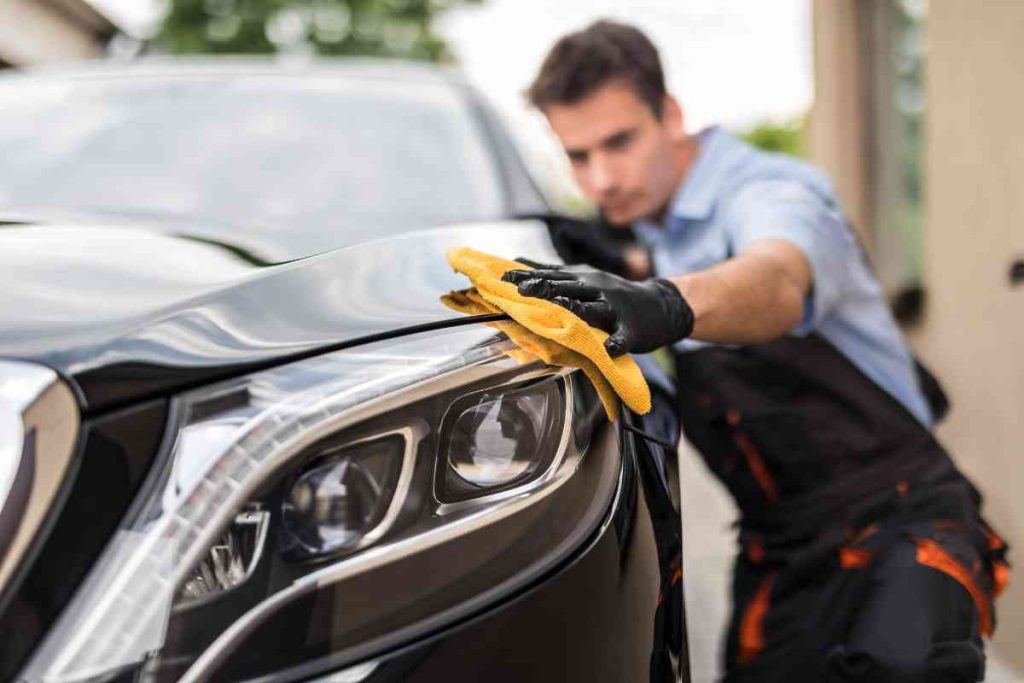
Car sealants are synthetic products that protect the car’s paint and exterior from UV rays, grime, excessive heat, acidic rain, and other contaminants.
They also offer a lovely glossy finish on any surface they are applied to.
They are 2X more durable and robust alternatives than wax and polish. They are a long-lasting solution that comprises car wax, polymers, and synthetic ingredients.
The lifespan is impressive, as it can put up with external elements for up to six months.
To get car sealant installed, you should be looking at a $750 fee, yet you are getting a pristine finished look, more extended protection, optimal resistance, and easier maintenance.
3. Ceramic Coating Installation
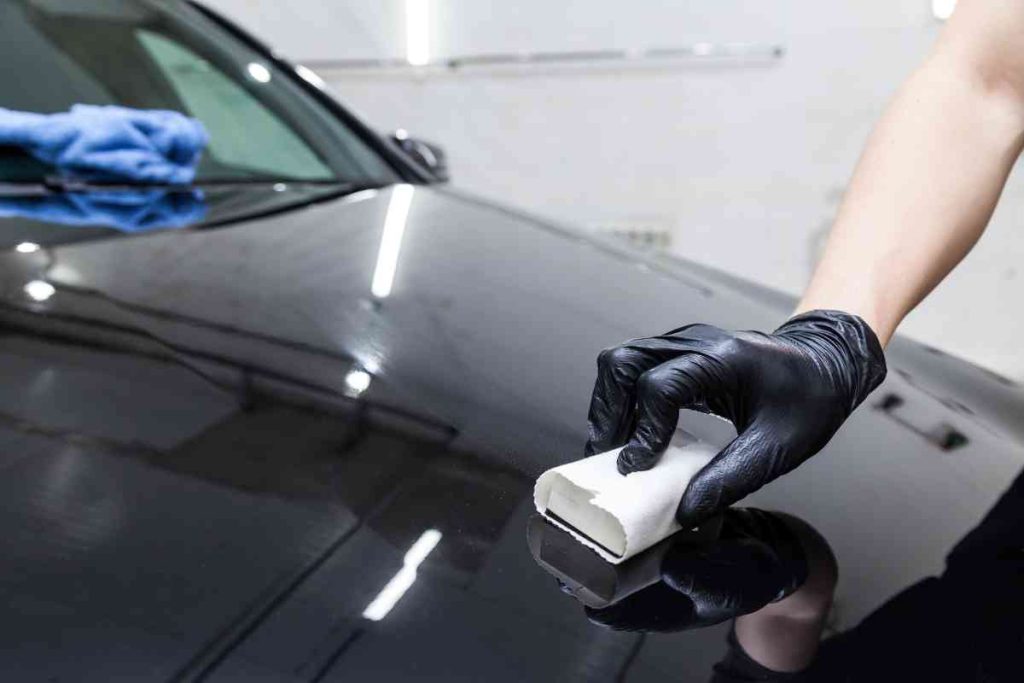
Ceramic coating is a silica solution that bonds to your car’s surface.
The bond can help protect it from the elements and make washing much more straightforward and look nicer when you go ahead with a wash!
This Industry-grade chemical polymer solution provides a thicker, more rigid layer of protection than car wax or paint sealant and is also longer-lasting.
Aside from that, Ceramic coatings are used in many different places on vehicles, including paint (to make it glossy and resistant to corrosion), car vinyl wraps (to protect from UV damage), and paint protection film for cars, wheels, and rims.
Many car enthusiasts consider it an alternative to PPF, but it is not. It is an option for waxing since its objective is to prevent stain marks, dirt, and grime from appearing on the paint job and ruining it.
It also offers protection from Harmful UV Rays and gives that Candy-Like Gloss you love.
On the other hand, it is not immune to all types of scratches and swirl marks.
Due to their chemical composition, they cannot quickly eliminate the water spots.
Installation could cost anywhere between $600 to $1,000 and could exceed depending on vehicle size and condition.
But once done, Ceramic coatings can last from three to seven years.
4. Car Paint Protection Film
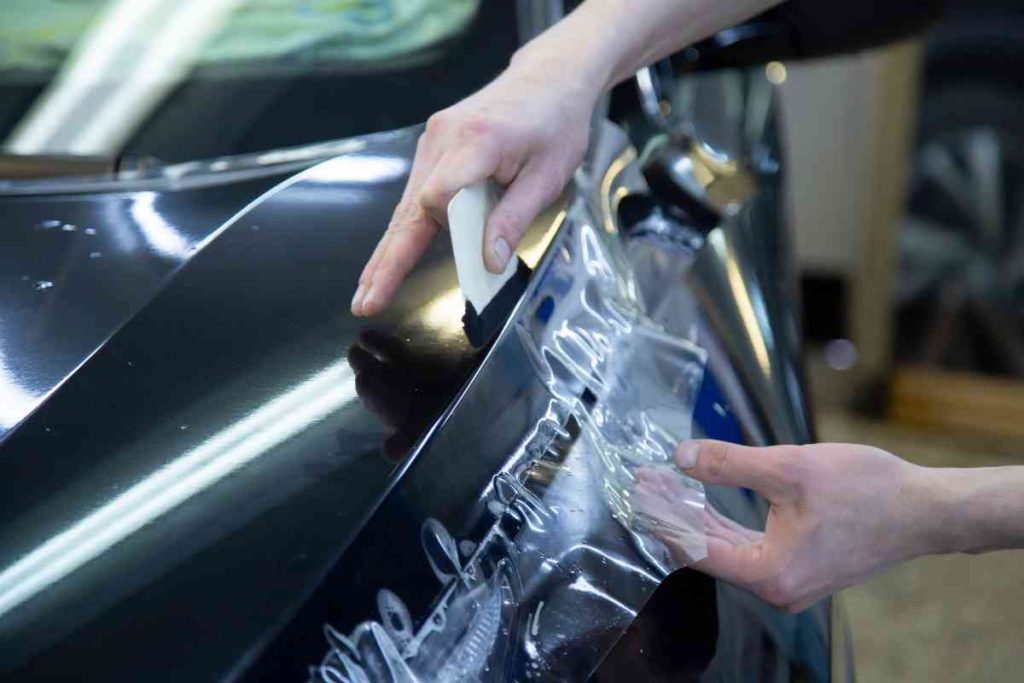
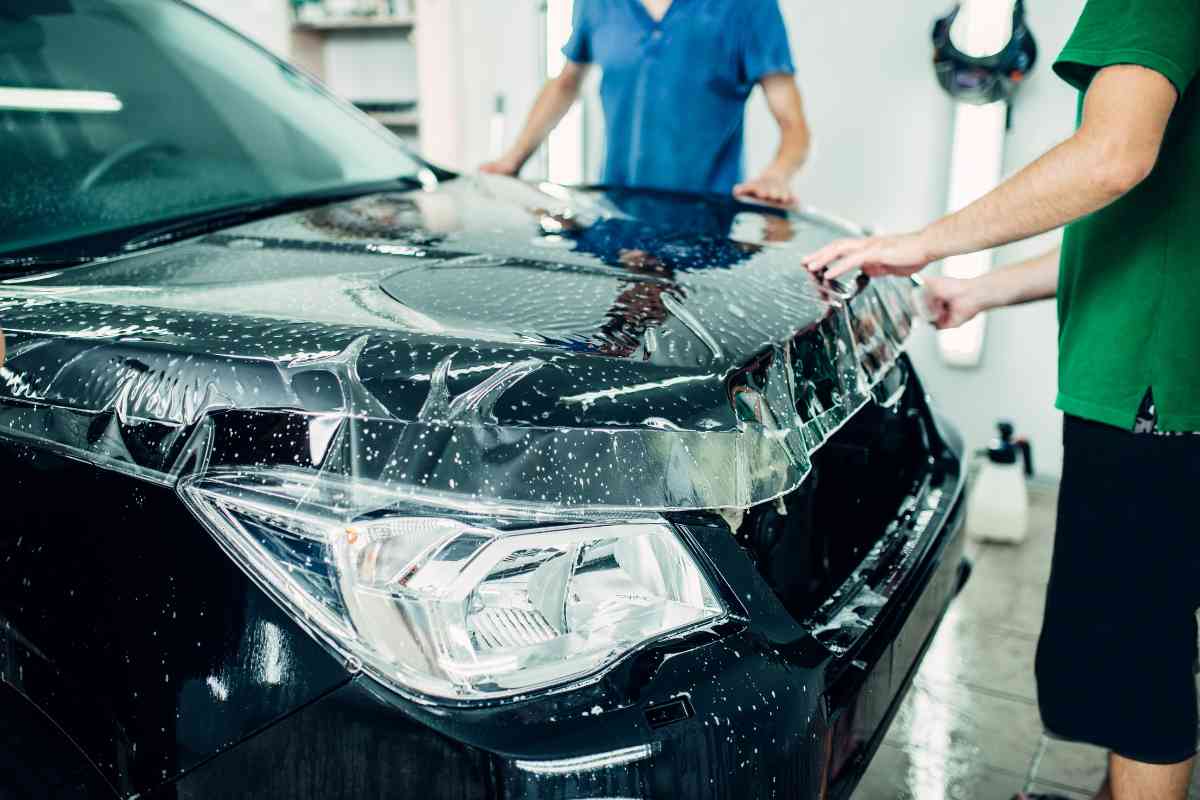
The paint protection film is the most durable of them all.
Composed of thermoplastic urethane, it is a self-healing film applied to any exterior painted surface, either on a used or new car, for max protection of the paint from bug splatter, stone chips, and minor abrasions.
PPF is also versatile, as it works exceptionally well on plastic and metal. You can apply them to your door sills, headlights, and bumpers.
Its shield can not be questioned, nor is the pay.
If you want the best-in-class durability, you should know it comes with a hefty price.
A professional installation for a PPF sits between $900 and $2500. And that depends on the coverage and condition of your vehicle.
However, if you want PPF on the entire car, the price could skyrocket from $2,500 to $7,000.
The good news is it will last up to four to seven years outdoors.
Frequently Asked Questions
What Is The Best Paint Protection For Cars?
The ceramic paint coating is the preferred solution for most experts because it offers one of the highest degrees of protection, especially Diamond Plate’s ceramic paint.
This liquid polymer can be applied to a car’s exterior surface as an upgrade from traditional finishes.
Because ceramic coating lasts so long and can be applied once to offer constant protection, it is ideal for situations where waxes or sealants would not be enough.
But the title of the “most durable” of paint is the protective film.
Of course, the ceramic coating is still highly worshipped for its formidable protection. But the protective film does the job best.
It is the most durable of all paint protection methods.
Composed of Thermoplastic urethane, it is applied to exterior surfaces to protect the surface against damage by exposure to the elements—and even rock chips and bugs!
What Coating Does Toyota Use?
Toyota uses a variety of coatings to protect their vehicles’ paint jobs.
But the most common is a ceramic coating, which you see on most modern cars.
This long-lasting coating is made to protect your car’s paint job—and it does just that.
It guards against harsh weather conditions, prolonged exposure to the sun and its harmful UV rays, road grime, and scratch-resistant contaminants.
A polished finish is another coating that Toyota uses on its vehicles.
This type of coating smoothes out imperfections in the surface of the paint job, making it easier for customers to see their car from all angles without having to worry about scratches or other damage caused by rough handling during transport or storage.
Which Car Color Hides Scratches Best?
Black hue can hide scratches better than most colors—and if you don’t use car wax or polish, it will also help keep them from becoming more noticeable over time.
On the other hand, if your car has an old-fashioned paint job with lots of swirls and scratches, then white might be the way to go.
White covers scratch better than black because it’s less reflective.
White is the best color for hiding minor dents and scratches because its bright hue helps hide slight imperfections—particularly on a sunny day.
While white might be optimally suited to this task, silver-grey or another light shade would do well as an alternative.
Which Car Color Gets Dirtiest and Fastest?
There’s a lot of debate about which car color gets dirtiest fastest.
Some people say white is the dirtiest, while others claim black is the worst. But which one is correct?
You’ll be surprised to learn that there’s no clear winner here—and that’s because many factors are involved in how dirty a car’s color gets.
The main factors are: how much sunlight it receives, how often it’s washed, the environment, and the type of material it’s made of.
However, according to professional painters, black cars are notoriously known to be easily dirty.
I know you probably think it is white. But on the contrary, it is black.
Dark colors tend to show dirt more readily than light colors. As a result, golden brown is the best color choice for people who don’t want their cars washed as often.
Conclusion
Now that you have read our article on the pros and cons of each paint protection method, we hope you can make a more informed decision when considering which service is best for your car.
Ultimately, paint protection services can give your vehicle’s exterior a glossy new clean look for years to come.
But the choice is yours. Some are inexpensively and quickly done. Meanwhile, others demand more elbow grease, money, and time before it fades.
Related: