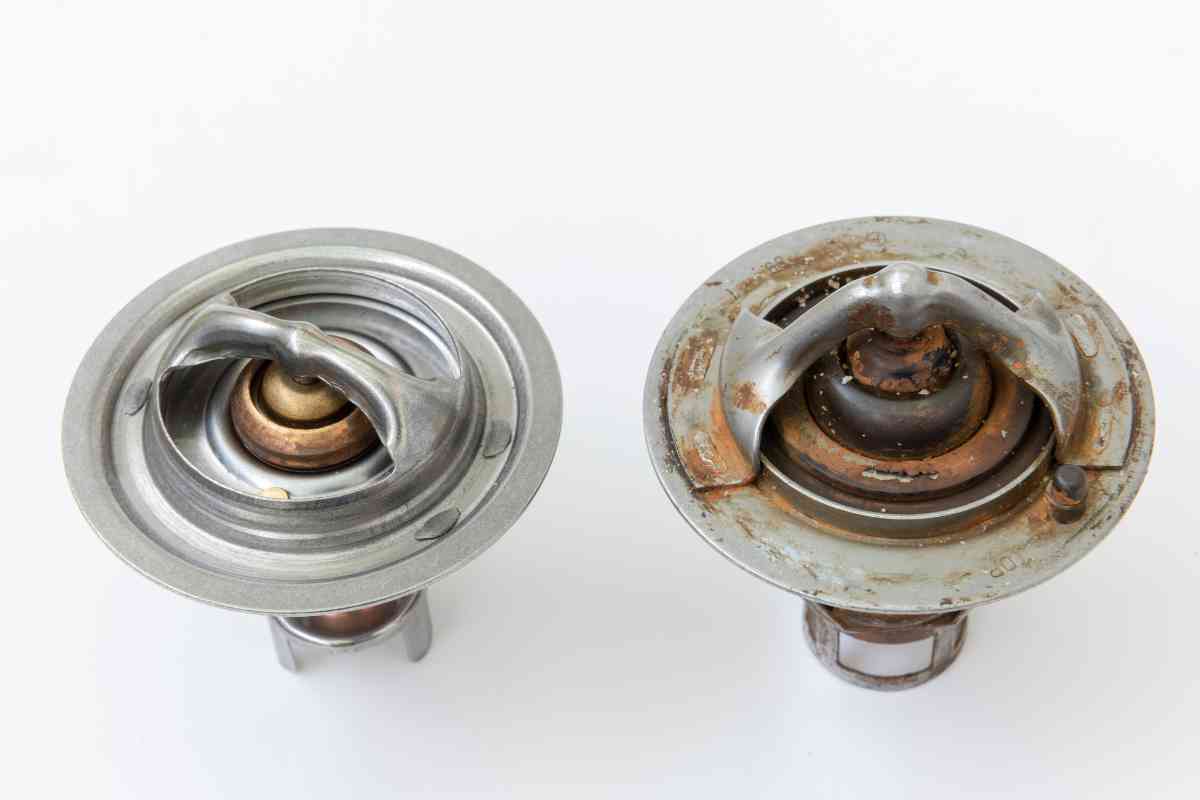
Symptoms of a stuck open thermostat can be a driver’s worst nightmare, especially when they strike in the middle of a long journey.
Imagine driving on a hot summer day with the scorching sun beating down on your vehicle, and suddenly, the temperature gauge starts to climb higher and higher.
One possible culprit? Symptoms of a stuck open thermostat.
While it may seem minor, a malfunctioning thermostat can lead to big problems and leave you stranded in the middle of nowhere.
So In this article, we’ll explore the symptoms of a stuck open thermostat, what happens if you ignore it, and what you can do to prevent costly engine damage and keep your car running smoothly.
Let’s get started right away!
6 Symptoms Of A Stuck Open Thermostat
1. Low Engine Temperature
When a car runs cooler than usual and fails to generate heat in the engine, it suggests that the thermostat is stuck open, allowing excess coolant to pass through.
In contrast, a thermostat stuck in the closed position can lead to engine overheating. While many drivers can recognize when the engine temperature gauge reaches the red zone, they may not detect a cool-running engine.
Therefore, understanding your vehicle’s standard operating temperature is crucial as either extreme, too hot, or too cold signifies cooling system malfunctions that require prompt attention.
To prevent such problems, it’s essential to regularly monitor your engine temperature gauge to ensure it stays within the standard operating range.
Also, knowing the average operating temperature of your engine is essential because it helps to detect any cooling system issues early.
2. Reduced Fuel Economy
When the thermostat gets stuck in the open position, it can cause the engine to run cooler than it should. This can reduce fuel economy because the machine will not run at its optimal temperature.
If your engine operates at a temperature lower than the optimal level, the lower temperature of the water jacket may cause fuel to condense on the cylinders.
When the fuel condenses, it will not burn efficiently, leading to decreased gas mileage for your car. This issue may arise when the thermostat remains open, causing the engine to run cooler than necessary.
It is essential to have a stuck open thermostat fixed as soon as possible to avoid further engine damage and maintain the car’s efficiency.
3. Heater Problems
The heater in your vehicle is designed to operate together with the engine’s cooling system.
While the car runs, the heater accumulates heat and draws in warm air from the engine, which is used to warm up the interior.
However, if the engine fails to warm up sufficiently due to a stuck thermostat, the heater cannot provide warm air to the cabin.
A stuck open thermostat can cause the engine to overheat and lose coolant.
If you experience any of these symptoms, it is essential to have your vehicle inspected by a qualified mechanic to determine if a stuck open thermostat is the cause of the problem.
4. Check The Engine Light
When the thermostat is functioning correctly, it remains closed during the engine’s warm-up phase to allow the engine to reach its optimal operating temperature quickly.
Once the engine reaches its optimal temperature, the thermostat opens to allow coolant to circulate through the engine and maintain a stable operating temperature.
If the thermostat becomes stuck in an open position, it causes the coolant to circulate continuously through the radiator, which prevents the engine from reaching its optimal temperature quickly.
This can result in the illumination of the “check engine light” as the engine control module may detect that the engine is not warming up to its proper temperature.
Additionally, continuous cooling can cause the engine to take longer to reach its desired operating temperature, negatively impacting the vehicle’s performance and fuel economy.
5. Reduced Engine Performance
When the thermostat in an engine becomes stuck open, it can lead to reduced engine performance. It happens because the thermostat regulates the flow of coolant through the engine and helps to maintain the engine at the correct temperature.
If the thermostat is stuck open, it allows the coolant to circulate continuously through the engine and radiator, which prevents the engine from reaching its optimal operating temperature quickly.
This can lead to a variety of problems with engine performance, such as reduced power, slower acceleration, and decreased fuel efficiency.
So, if you notice any signs of reduced engine performance, it’s essential to take it to a qualified mechanic.
6. Coolant Under The Radiator Cap Swirls Even At Lower Temperature
If you’re preparing to start your engine in cold conditions, there are a few key steps to ensure your vehicle functions correctly.
One of these steps is to open the radiator cap before starting the engine. By doing so, you’ll be able to inspect the radiator’s coolant and ensure that everything is flowing as it should be.
When you look inside the radiator, watch for any swirling of the coolant. If you notice that the coolant is swirling, this could indicate that the thermostat is stuck in an open condition.
Read Also: Front Wheel Bearing Noise Symptoms
Frequently Asked Questions
How Often Should You Replace The Thermostat?
The frequency at which you should replace your car’s thermostat depends on various factors, such as the make and model of your vehicle, the driving you do, and the conditions you drive.
However, as a general guideline, it is recommended to replace the thermostat every 50,000 to 100,000 miles or every ten years, whichever comes first.
Also, it’s important to note that if you notice any signs of a faulty thermostat, such as engine overheating or reduced fuel efficiency, it’s a good idea to have it replaced as soon as possible.
How Do I Know That The Thermostat Is Going Bad?
If you suspect that your car’s thermostat is failing, there are several signs that you may notice while driving. These signs can include:
- The engine is running hotter than normal
- The machine is running more relaxed than normal
- Poor performance or reduced fuel efficiency
- The heater is not working properly
- The “check engine” light coming on
How Much Does It Cost To Replace A Thermostat?
The cost of replacing a thermostat can vary depending on several factors.
It could be your vehicle’s make and model, the thermostat’s location, and the labor cost in your area.
Replacing a thermostat can range from $150 to $300, including parts and labor.
However, this is just an estimate, and the cost can be higher or lower depending on the specific circumstances.
In addition to the cost of the thermostat itself, other components may need to be replaced, such as gaskets, hoses, or other parts related to the thermostat.
So, it’s good to have a qualified mechanic inspect your car to determine what needs to be replaced and provide you with an accurate estimate of the total cost.
Can You Drive A Car With A Bad Thermostat?
While it is possible to drive a car with a bad thermostat, it is not recommended, as it can cause severe damage to the engine.
A bad thermostat can cause the engine to overheat, leading to warped or cracked cylinder heads, blown head gaskets, or other costly repairs.
In addition to the risk of engine damage, a bad thermostat can cause poor performance, reduced fuel efficiency, and other problems.
Therefore if you suspect your car’s thermostat is faulty, it must be inspected and replaced immediately.
Is It Ok To Drive With A Thermostat Stuck Open?
You might think that if you have a stuck open thermostat, then your car is safe to drive —but there’s another side of the coin:
This can damage your engine by overheating, leading to more severe problems. And it’s a no-brainer: if your car runs too hot, it’s a safety hazard.
No doubt, the vehicle can physically move from point A to B, but the problem awaits you.
Hence, it is not advisable to drive with a thermostat stuck open.
What Are The Effects Of Removing A Thermostat?
The effects of removing a thermostat can be devastating.
Without a thermostat, your vehicle will not only be uninhabitable, but it will also be unsafe.
Your engine will over-cool. And that is not good.
Also, it increases fuel consumption drastically because the engine’s coolant temperature sensor assumes that it is not at an average operating temperature, so it injects more gasoline.
Conclusion
A stuck open thermostat is a problem that should always be addressed.
While it may seem like a minor issue, it can cause significant engine problems and leave you stranded on the side of the road.
Paying attention to the warning signs and taking action promptly can prevent costly repairs and keep your car running smoothly for years.
So, if you suspect your car has a stuck open thermostat, don’t hesitate to take it to a qualified mechanic for a diagnosis and repair.
Remember, your car’s engine is the heart of your vehicle, and keeping it in good working condition is essential for your safety and the longevity of your vehicle.
Related: