Do new tires need to be balanced?
The answer is a resounding YES!
It sounds weird. Why do you need to have them balanced when they’re brand new? Maybe you thought they already came balanced.
Although tire manufacturers balance tires during production, fine-tuning is required once mounted on wheels.
And by doing so immediately after purchase, you’re saving yourself money and eliminating interior discomfort while driving.
What Is Tire Balancing?
In many vehicle owners’ manuals, tire balancing is listed among recommended services for the best performance and most extended service life of tires. This may be confused with wheel alignment; however, they are two separate processes.
Let me elaborate:
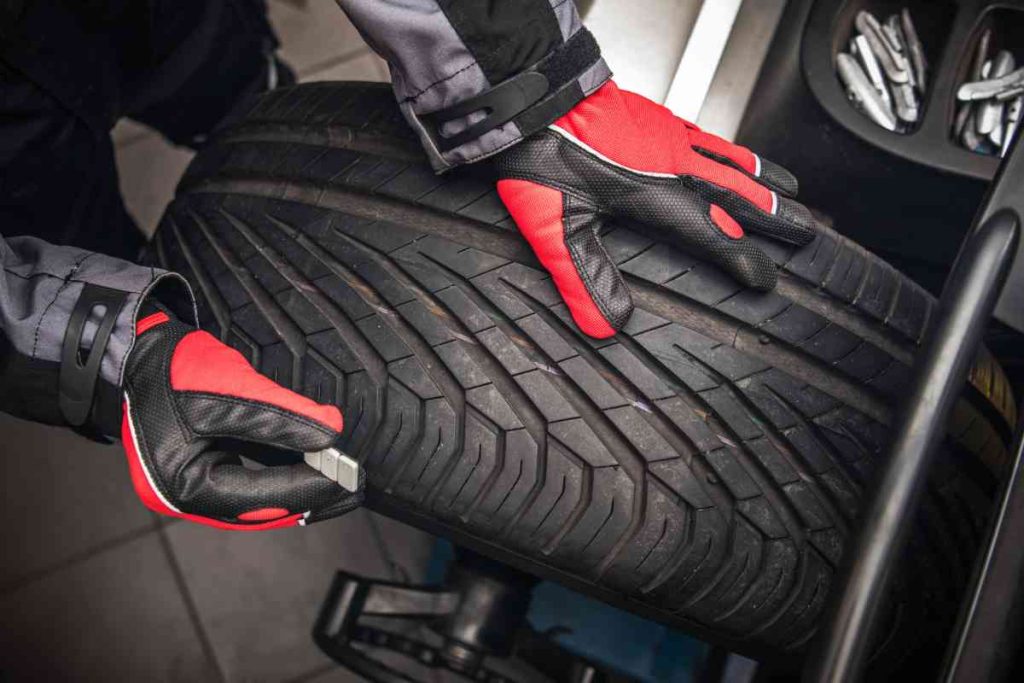
Tire balancing is a procedure that ensures even tire wear and provides for a smoother ride. It does this by adequately adjusting the weight distribution around — rather than the angle of—the wheels.
The fundamental process is using a computerized machine that identifies the amount of weight that is needed to ensure the tire has an equal balance while you’re driving.
Even though the tire looks perfectly round, tiny imperfections need to be corrected. And over time, those imbalances cause vibrations in a rotating tire, making driving uncomfortable and inefficient.
Related: Car Bounces While Driving At High Speed (Top Five Reasons)
Do New Tires Need To Be Balanced?
I have said this before, YES! New tires need to be balanced.
However, if you don’t, you will face the wrath of having tire imbalance.
Unbalanced tires are often responsible for a variety of driving abnormalities.
Here are a few:
1. Vibrations
Vibrations in the steering wheel are a sign of unbalanced tires. A difference of half an ounce between the front and rear tire pressure is enough to cause vibrations that can easily be felt as you drive.
As the tires wear, their imbalance causes ever more severe vibrations that can adversely affect the car’s interior and overall handling.
Other causes of wheel vibration include a damaged tire, problems in the wheel assembly, and even a bent rim. It’s vital to diagnose this quickly to avoid dangerous situations.
2. Steering Problems
You may have unbalanced tires if your steering feels stiff at low speeds.
This makes it challenging to steer smoothly and creates a delay in response time—not good because accidents that could have been avoided will occur.
3. Uneven Tire Wear
Uneven tire wear can indicate that your tires need to be balanced or appropriately aligned.
And unusual wear on tires can lead to a flat, and if the tire thins too much, it could rupture while you’re driving—which is dangerous. This abnormal wearing pattern is known as “tire cupping.”
Rotating tires can temporarily solve poor tire wear if you’re short on cash and need new wheels. Be sure that your car is adequately balanced after installing any new tires.
4. Bad Fuel Economy
Unbalanced tires waste gas.
The extra friction created by an imbalance forces the engine to work harder, using more fuel than expected and leading to higher emissions of pollutants like carbon dioxide.
If your gas mileage is lower than usual, check the pressure in all tires.
Underinflated tires may cause cars to consume more fuel—but if the pressures are standard, unbalanced wheels might be at fault.
5. Bad Shocks And Bearings
The shocks, springs, and bearings crucial to a wheel assembly’s functionality will experience much more stress when tires aren’t balanced.
And if you don’t fix your unbalanced tires, you will replace more than just the tires.
NOTE: balancing helps extend your tire-life
As with tire rotation, wheel balancing also helps extend the life of your tires by ensuring the tire tread wears down evenly.
Even tread wear prevents blowouts; other tire issues and unbalanced wheels can cause uneven tread wear.
Balanced wheels remain flush on the road without bouncing or vibrating. And on the other hand, Unbalanced wheels can skip on the street, creating vibration and uneven tire tread wear.
Conclusion
So that is all you need to know whether new tires must be balanced.
Remember, balanced tires reveal other car-related issues. If you’re faithful about keeping your wheels balanced yet still feel pulling and road vibration, you might have something else with your vehicle’s suspension.
For example, if you feel every bump on the road yet you have brand new, balanced tires, your shocks, and struts may be worn.
If your vehicle is difficult to control, it could be the wheel alignment or an issue with your steering system.
So bare that in mind!
Related: