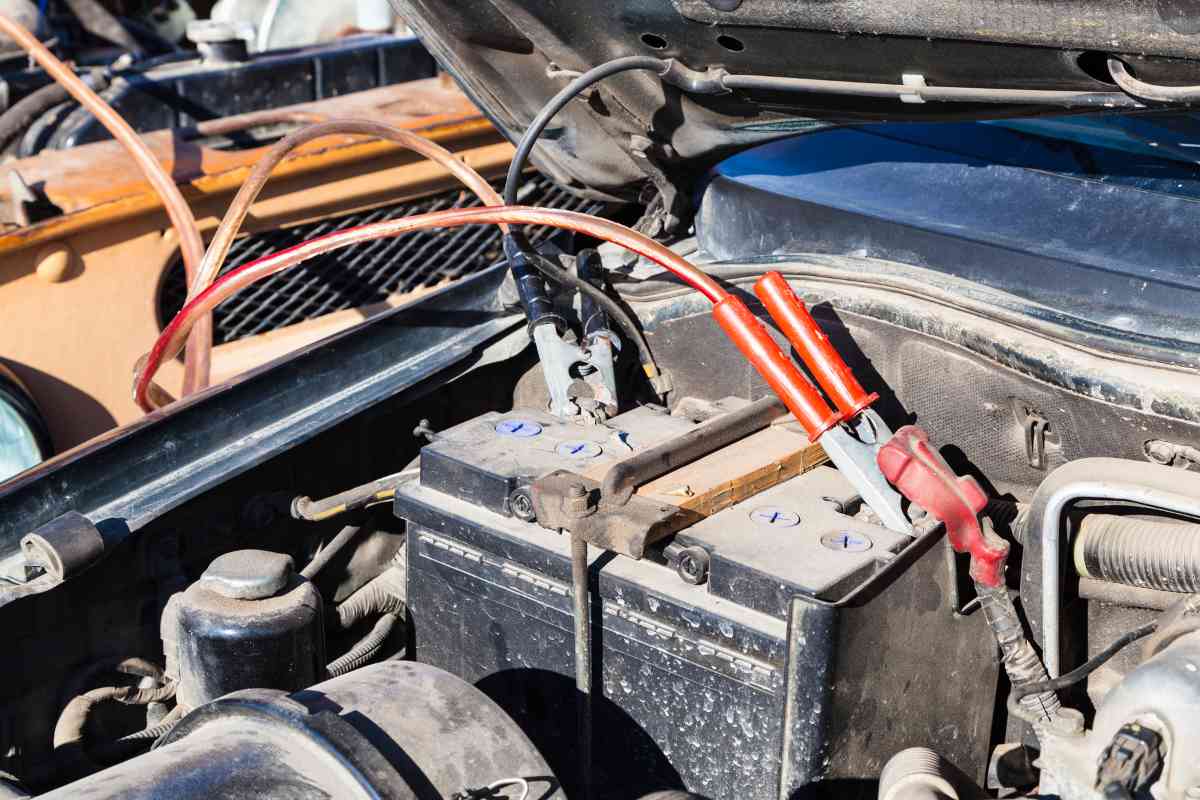
A bad alternator is one of the most common reasons a car does not start, considering it causes your battery to drain rapidly.
Replacing it would be the right thing to do. But what if you can’t, at least at the moment? It would be reasonable to jumpstart the vehicle for a boost.
However, can you jumpstart a car with a bad alternator?
Yes, You can jump-start a car with a bad alternator, so long as the battery hasn’t gone pretty low.
Aside from that, Jumpstarting a car has its dos and don’t. A simple mistake could put the car’s engine in jeopardy.
Therefore, we will also show you how to perform the jumpstart procedure.
Can You Jumpstart A Car With A Bad Alternator?
A scenario where your alternator goes rogue has likely left you stranded halfway to your destination.
It is logical to jumpstart the car, so you can hit the road again and visit a nearby auto repair shop.
However, it is only sometimes doable.
If your alternator fuse or fusible link has been blown, jumpstarting will not work.
WARNING!
While using jumper cables to jumpstart a vehicle with a bad alternator will work, you should disconnect them as soon as the engine turns over to avoid damaging sensitive electronic components.
The Complete Guide To Jumpstart Your Car
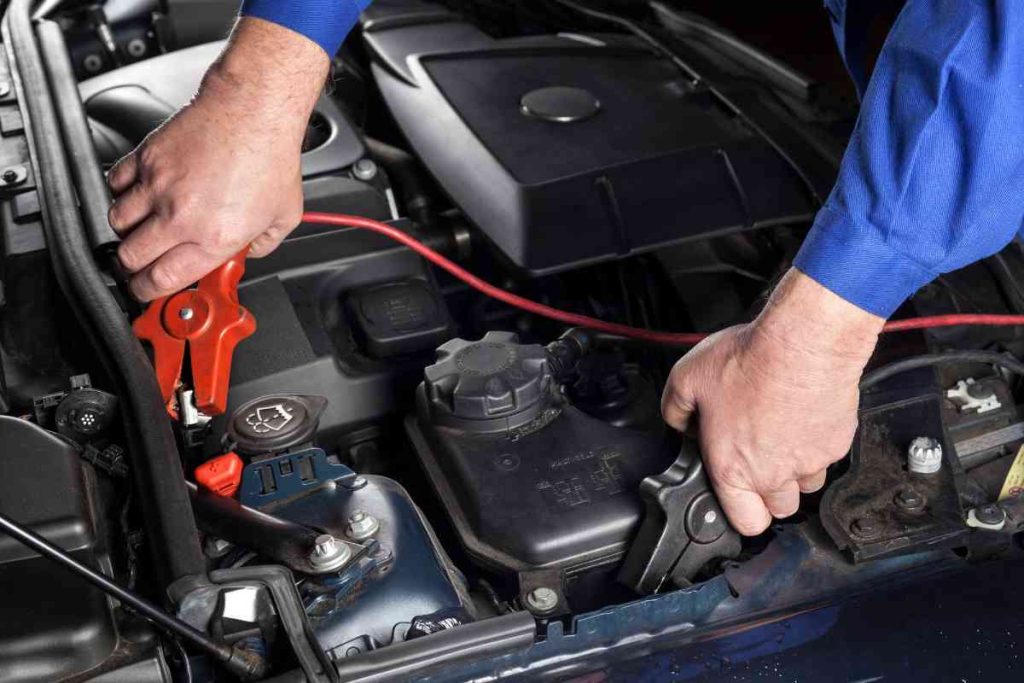
A dead battery is a driver’s worst nightmare. But if your car’s alternator stops working, you might be looking at an even bigger disaster.
It is a crucial component of your car’s operation.
If the alternator fails, however, you can still jumpstart your car and get to a mechanic—you just need to know how to perform the procedure.
There is so much at stake. So below is our step-by-step guide on how to jumpstart your car successfully —even with a lousy alternator.
1. Position The Booster Vehicle
First, park the car with a full battery close to the other vehicle.
You can either park both vehicles beside each other or facing bumper-to-bumper —whichever is convenient.
The idea is: they just need to be close enough that the jumper cables can reach both batteries.
Turn off the engines of both cars, remove the keys from the ignition, and set the parking brakes. Turn off all car accessories (i.e., climate control, lights, and radio).
NOTE: If your battery has died, jumpstarting it with another vehicle to boost it is alright—as long as the other car’s battery is fully charged.
2. Locate Battery Terminals
To access a car’s battery, raise the hood of your vehicle. A car battery has two terminals—positive (+) and negative (-)—that must be connected for cars to start.
Sometimes these terminals are hidden beneath caps or plates; other times, they’re remote metal posts placed under an accessible part of your engine so you can jump-start it.
The positive terminal is always the red cap. If you need to know where the terminals are, consult your vehicle’s manual.
WARNING!
You MUST brush away any corrosion the terminals have (if it has any) with a wire brush or aluminum foil.
Don’t just use your bare hand, as it can irritate your skin.
3. Connect Jumper Cables
A pair of spring-loaded clamps are used to connect the jumper cables. One clamp attaches to a positive terminal, and another connects to a negative or grounding post on either battery.
The clamps must be properly connected and in the correct order to ensure safety. Incorrect connections can injure or damage the car’s electrical system and interior components.
More importantly, keep the metal clamps from touching each other while attaching them to the battery terminals.
So this is how to do it:
Connect the RED clamp to the positive terminal of the dead battery.
Next, connect one end of the cables to BOOSTER’s positive terminal.
Attach the black clamp to the negative terminal of the BOOSTER BATTERY.
Finally, attach the BLACK clamp to an unpainted metal part of your car’s engine—a bolt or bracket will do. Some models have a grounding bolt placed solely for this purpose; if so, use that one.
Note that the final step is on the dead car battery.
4. Jump-Start The Car
Check that the connected booster cables are far from any moving engine parts. Start the engine of the vehicle donating power.
If the engine doesn’t turn over immediately, wait a few minutes for the battery to build up enough charge before trying again.
Also, consider increasing the idle speed of your booster vehicle in an attempt to help this happen more quickly.
Note: Even on rainy days, you can jump-start a car safely.
The increased moisture doesn’t change anything about the voltage of the vehicle battery and, therefore, won’t make jumping it in the rain more dangerous than doing so in dry conditions.
5. Disconnect Jumper Cables
Disconnect the jumper cables from the car by reversing the order in which you connected them. Always keep metal clamps away from each other when connecting and disconnecting wires to battery terminals.
Remove the negative clamp from the jumped car.
Then, disconnect the negative clamp from the booster car.
Disconnect and remove the positive clamp from this vehicle.
And lastly, disconnect and remove the other vehicle’s positive clamp.
6. Drive The Jumped Car
After returning the jump cables to your emergency kit and closing the hood, drive for at least 20 minutes so that you can let your battery recharge.
If your car stalls, turn off the engine and park it in an open area of a safe location. If you need to jump-start again, ensure the battery is not deteriorating due to age—especially if it’s over a few years old.
Call a professional to handle the task if it does the same thing.
How Far Can You Drive With A Bad Alternator?
The answer to this question is a vague one.
A bad alternator will only let you drive briefly before your car overheats and breaks down.
It’s hard to pinpoint an exact driving distance, but if you drive slowly and keep your RPM low, it will probably take about 20 minutes or 13-15 miles. If your battery is low or the car dies suddenly without warning, it may only last 10 minutes (7-10 miles).
However, several factors affect how long you can drive with a bad alternator, some of which include the following:
- State of the alternator
- State of the battery
- Electrical Load (AC, Headlights, etc.)
- Car Age
- Speed
NOTE: A broken alternator can cause problems with your car’s charging system and other electrical components, which could lead to even more severe issues down the road.
If you’re having trouble with your alternator and need help fixing or replacing it, contact a mechanic ASAP!
Conclusion
So YES! You can jumpstart your car with a lousy alternator, assuming the failure hasn’t damaged the battery.
But it is generally risky to jump-start a car with a bad alternator.
However, in an emergency, it is worth a shot.
If you try it and it works, great! If not, you’ve lost some fuel and a few minutes of your time.
But please be aware that if you are prone to common electrical issues unfavorable to the battery’s health, you could be in for an even bigger electrical shock.
Related: