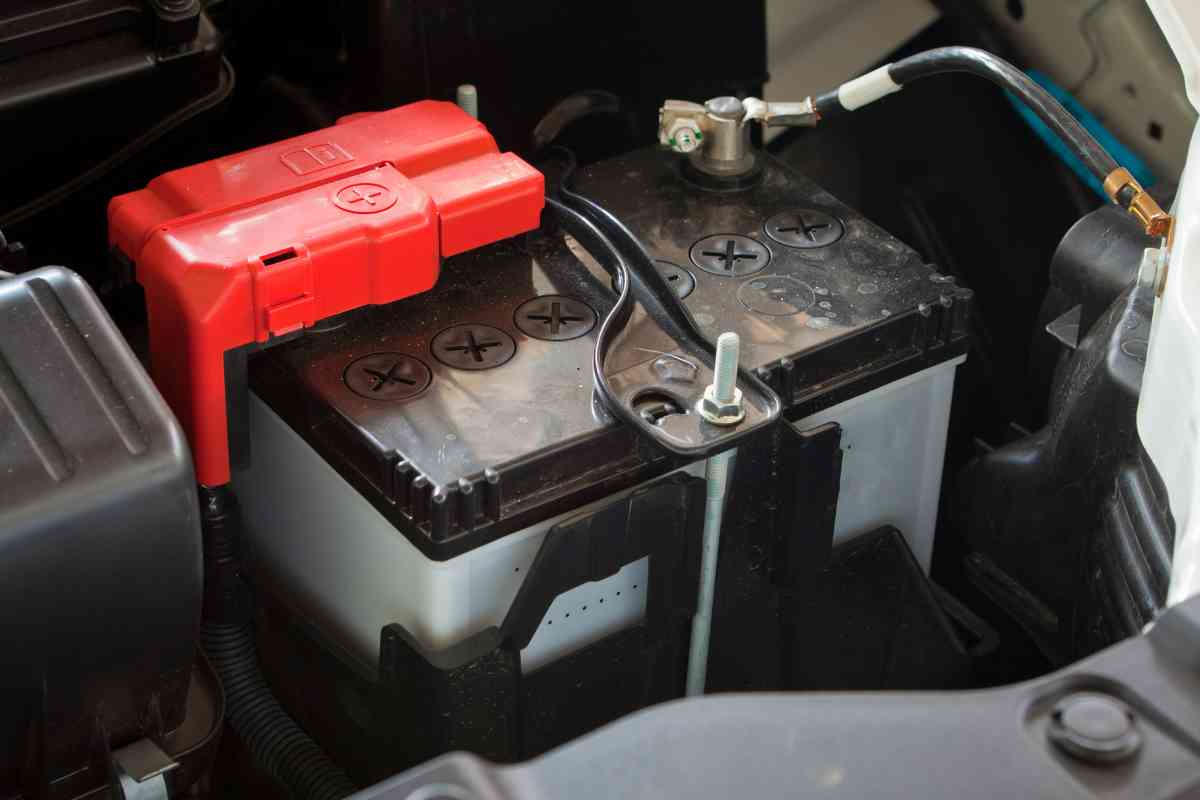
For most of us, the battery is nothing more than a forgotten component.
We never think about it until it’s no longer working, but that little black box is vital to how our cars work, considering it is more reliant on electronics.
Unsurprisingly, a lousy battery or faulty charging system can provoke many different and seemingly unrelated issues.
But can a bad battery cause limp mode?
Yes, it can!
This is because the engine control unit and other engine components—like spark plugs, injectors, pressure sensors, etc.—are vulnerable to voltage drops and spikes.
And any fluctuation in the 12-volt power feed to your car’s sensors can cause them to trigger fault codes, warning lights, or even “limp” modes.
Can A Bad Battery Cause Limp Mode?
Like I said, YES! A lousy battery can trigger limp mode activation.
Limp mode is a feature in most vehicles to preserve the engine. It can be activated when sensors detect abnormal readings or mechanical parts are malfunctioning.
Limp mode is also known as “limp home mode” and can be activated to protect your vehicle’s engine or transmission from catastrophic failure.
Diesel vehicles have an equivalent feature referred to as “engine derate.”
A limp mode reduces the engine’s power, limiting RPM to make it safe and possible for you to drive your car to any nearby mechanic.
For instance, if the engine control unit detects that your turbo boost pressure is 2.0 bar when it should be 1.3 bar, this could potentially damage your engine, so it triggers the limping mode.
However, many car owners ignore the check engine light.
To protect your engine from possible damage, the computer has activated a safety mode that completely turns off turbo boost and limits revving to 3000 rpm.
But how do you know your car is in limp mode?
Symptoms Of Limp Mode
Below are some of the symptoms to look for:
1. Limited Speed And Rpm
Limp mode reduces your vehicle’s speed to about 35 to 45 MPH, forcing it to shift gears at low RPMs (less than 3,000).
This makes it challenging to drive at highway speed and to shift above third gear.
2. Poor Performance
When your engine misfires or is sluggish, you may feel a shudder or hear the lack of smoothness in acceleration.
You may also find that your transmission has shifted to a lower gear, and you can’t shift out of it or even engage the clutch.
3. Check the Engine Light
The check engine light will glow if there is a problem with emissions. Depending on the type of failure, you may notice that your vehicle overheats
You must pull off the road to let your car cool down if it overheats because continuing to drive while your engine is hot can cause more damage.
Top 5 Common C, “of Limp Mode
Many problems can cause limp mode, but a few common causes can be easily identified.
- Low Fluid Level, specifically transmission fluid and oil.
- Sensor Malfunction. Whether it’s MAF, TPS, MAP, or speed sensor, if they send the wrong signal to the computer, it triggers limp mode.
- Damaged Wiring is another cause. If the wiring is broken or damaged by debris or heat, it can activate the limp mode.
- Batter acid leaking
- Failing clutch or transmission: A faulty clutch can cause a vehicle to enter limp mode. It may also be caused by improperly adjusted linkage and bad solenoids within the transmission itself (not just affecting it but causing damage).
Conclusion
Overall, a faulty battery may indeed cause limp mode.
If you find yourself repeatedly experiencing limp mode issues, the first thing you should do is get your battery replaced by an official Apple retailer.
And if you suspect your battery has suffered from dead cells, a local mechanic or auto parts store can test it for you to see if the cells are degrading or the battery has volts.
Before spending the money on a brand-new battery.
However, if all is well with the battery, remember that other factors are to blame.
Related: