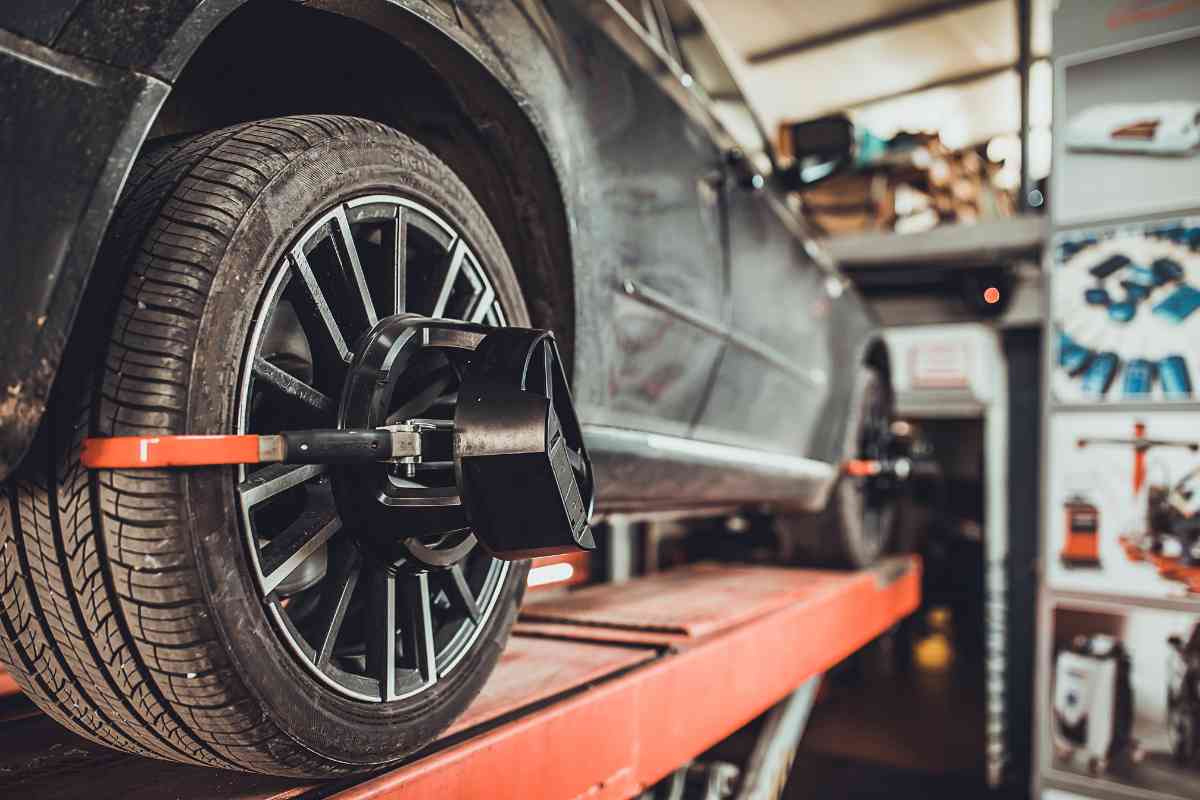
Have you ever experienced your car pulling to one side or noticed uneven tire wear?
That is one of the rear wheel alignment symptoms. And we will discuss a lot of them in this article.
Now, these symptoms are often the result of misaligned rear wheels, a problem that is frequently overlooked but can have significant consequences.
At least if you can spot them on time and act promptly, you stand a chance of saving your wheel. And, more importantly, eliminating the risk of a potential accident.
So below is the list of common rear wheel alignment symptoms that shouldn’t be ignored!
Rear Wheel Alignment Symptoms
1. Vehicle Pulls to One Side
To check, find a straight, low-traffic road, and release the steering wheel to let the vehicle guide itself.
If the car starts to swerve or drift towards a particular side, regain control by resting your fingers on the wheel and steering lightly to stay on the road.
Repeat the test once the vehicle is back on track. If the car still pulls towards the same side, it indicates that the wheels require realignment. The extent to which the vehicle drifts from a straight line reflects the severity of the misalignment.
Neglecting this issue could make it difficult to drive straight, and there is a risk of crossing over into other lanes if the driver doesn’t maintain a firm grip on the steering wheel.
So, if you encounter this issue, it is best to take your vehicle to an auto mechanic and have it realigned without delay.
2. Uneven Steering Wheel
When driving on a straight and level road, keeping your vehicle’s steering wheel straight and centered is essential.
One way to ensure this is to observe the emblem in the middle of the steering wheel. The steering wheel is correctly aligned if the emblem remains level when driving straight.
However, if the emblem tilts slightly in any direction, the steering wheel is misaligned and requires an immediate wheel alignment.
After realignment, the steering wheel will remain centered, making it easier to control the vehicle.
3. Steering Wheel Vibrates
A steering wheel that vibrates during vehicle motion can indicate several issues, including misaligned or unbalanced tires.
The vibration occurs when the tires spin, causing the steering wheel to shake. This can be felt in your hands and may become more pronounced as you increase speed.
However, a vibrating steering wheel could also indicate other more severe issues, such as worn-out suspension components or brake problems. These issues could cause the steering wheel to shake while the vehicle is in motion.
Regular vehicle maintenance, such as tire rotation and balance checks, can prevent misaligned or unbalanced tires and the vibrations they cause.
4. Uneven Tire Wear
Uneven tire wear is a common sign of misaligned wheels. When the wheels are not correctly aligned, the tires experience uneven pressure and friction against the road surface, leading to accelerated wear on specific parts of the tire treads.
This can result in a few types of tire wear patterns, such as excessive outer tire wear, inner tire wear, or tire scalloping.
To determine if your wheels are misaligned, use a tread depth meter to measure the tread depth on both sides of each tire. This tool will give you the most accurate measurement of the rubber depth on each tire, allowing you to compare the depth on all four tires.
If the rubber depth is different on one or more tires, it could indicate that the wheels are not aligned properly.
Ideally, all four tires should have the same depth, indicating that they are wearing evenly and that the wheels are aligned correctly.
5. Loose Steering
A loose or sloppy steering wheel can be hazardous since it can cause a delayed turning response time, jeopardizing your safety.
Misaligned wheels are a common cause of this problem, and it is essential to have your vehicle checked by a professional mechanic immediately.
Regular vehicle maintenance and inspection can help identify and address any steering or alignment issues early on.
Neglecting steering or alignment problems can lead to further damage and expensive repairs and compromise your safety on the road.
Related: Front Wheel Bearing Noise Symptoms
How Often Should I Have My Vehicle’s Rear Wheel Alignment Checked?
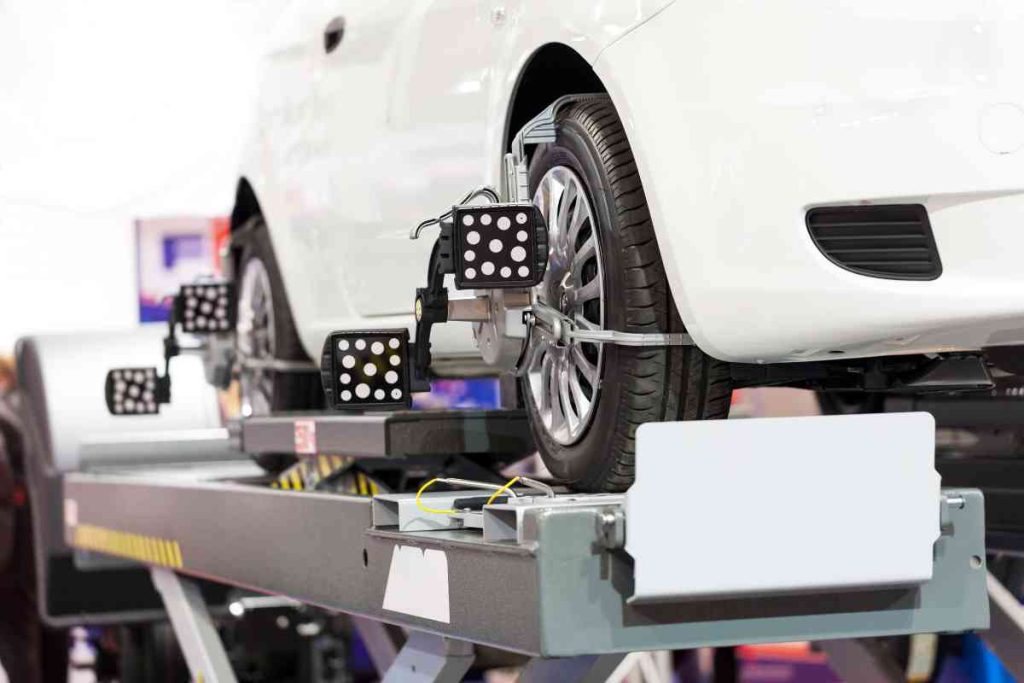
Regularly checking your vehicle’s rear wheel alignment is essential for maintaining proper tire wear and handling and preventing issues such as uneven tire wear and decreased fuel efficiency.
The frequency with which you should check your alignment depends on several factors, including your driving habits, the condition of your vehicle’s suspension components, and the type of roads you typically drive on.
As a general rule, it’s a good idea to have your rear wheel alignment checked at least once a year and more often if you notice any symptoms of misalignment.
Additionally, you should check your alignment after a collision or if you hit a curb or pothole.
Frequently Asked Questions
Can I Check My Vehicle’s Rear Wheel Alignment Myself?
Checking and adjusting the rear wheel alignment of a vehicle is a complex process that requires specialized equipment and expertise.
Therefore, it’s wise to check your vehicle’s rear wheel alignment on your own if you have the necessary equipment and knowledge.
In addition, improperly adjusting the alignment can cause more harm than good, leading to further issues such as premature tire wear, decreased fuel efficiency, and handling problems.
So, it’s best to have your vehicle’s rear wheel alignment checked and adjusted by a qualified mechanic with experience in alignment services.
How Do I Know If My Vehicle Needs A Rear Wheel Alignment?
Several signs may indicate your vehicle needs a rear wheel alignment check, including:
Vibration Or Shimmying: If you experience vibrations or shimmying at higher speeds, this could be a sign that your wheels are out of balance or not aligned properly.
Recent Impact: If you recently hit a curb or pothole or were involved in a collision, this could cause misalignment issues, and it’s nice to have your alignment checked.
Vibration Or Shimmying: If you experience vibrations or shimmying at higher speeds, this could be a sign that your wheels are out of balance or not aligned properly.
Vehicle Pulls To One Side: If your car pulls to one side or the other while driving, this could indicate a misalignment issue.
Crooked Steering Wheel: If your steering wheel is not straight when driving on a level road, this could be a sign that your wheels are not aligned properly.
What Is The Cost Of Getting My Rear Wheel Alignment Checked?
The cost of getting your rear wheel alignment checked can vary depending on several factors, such as the make and model of your vehicle, your geographic location, and the service provider you choose.
Typically, a rear wheel alignment check can range from $50 to $100.
However, the cost can increase if any additional repairs or adjustments are needed, such as replacing suspension components or adjusting the camber or caster angle.
So, getting a quote from a qualified mechanic before having your rear wheel alignment checked is best to ensure you are aware of any potential costs involved.
Conclusion
Rear wheel alignment is crucial to your vehicle’s performance and safety.
If your vehicle exhibits symptoms such as uneven tire wear, drifting, or a crooked steering wheel, it may be time to have your rear wheels realigned.
Neglecting rear wheel alignment issues can damage your vehicle’s suspension further and pose a safety risk to you and other drivers on the road.
Therefore, it’s recommended to have your vehicle’s alignment checked regularly and after any significant impact or collision.
Additionally, if you notice any symptoms of misaligned rear wheels, don’t hesitate to take your vehicle to a trusted mechanic or auto shop for an alignment service.
Related: